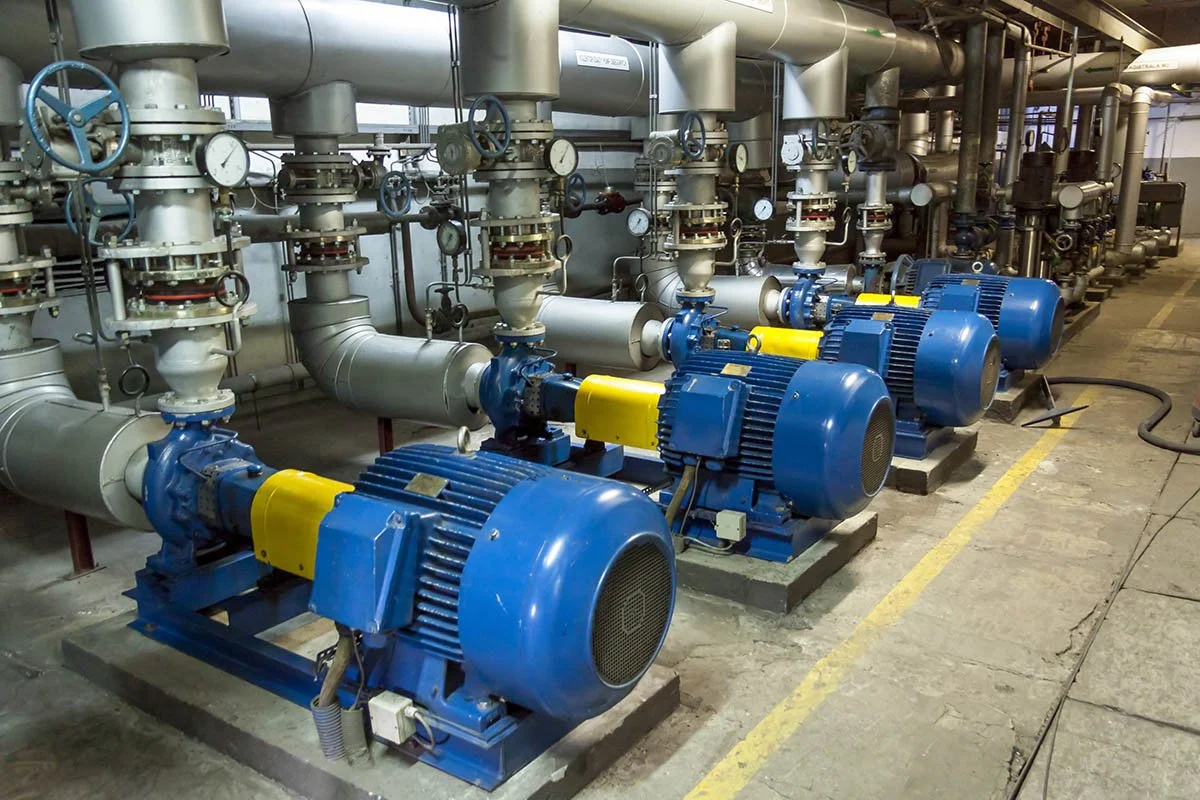
Noise in an industrial facility is normal. But what happens when parts of a process begin to deteriorate? Often, the sound signature of equipment will change—gradually over time, or suddenly through acoustic events that signal faults or failures.
In industries like shipping, pulp and paper, oil and gas, and metal production, critical systems are typically equipped with a variety of sensors to measure performance and stability, also known as asset management or condition monitoring. Despite this, one of the most vital diagnostic tools remains the operator’s ear, which is trained to recognize subtle shifts in how equipment sounds. Replicating this sensory expertise digitally, especially in noisy, harsh environments, has long been a challenge.
Listening With Superhearing
Squarehead’s microphone arrays offer a breakthrough. Composed of hundreds of “ears,” the array provides advanced acoustic awareness of your monitored environment. By placing listening points at strategic locations, you can stream multiple acoustic trends simultaneously and integrate them directly with your industrial control system. This offers not just early warning of problems but greater efficiency, predictive maintenance, and reduced unplanned downtime overall.
How Acoustic Condition Monitoring Works
Our acoustic sensors act as precise instruments for capturing and analyzing sound in industrial environments. By continuously monitoring the acoustic profile of key components and processes, they can detect subtle changes—whether in trend, intensity, or frequency—that may signal early signs of wear, leakage, or failure.
Through both real-time streaming and historical analysis, deviations from normal behavior can be identified before they escalate. These insights enable proactive maintenance planning, improved resource allocation, and reduced unplanned downtime.
Each microphone array can monitor multiple machines or processes simultaneously, isolating individual audio streams and extracting features that can be linked to specific mechanical behaviors, enabling accurate trend tracking and root cause analysis.
Asset Management Across Machinery
Acoustic feature trending is applicable across a wide range of machinery. Below are key examples of components and the types of events that can be detected through sound analysis:
PUMPS
Cavitation
Seal leakage
Bearing wear
GEARS
Wear and tear
Tooth damage
Lack of lubrication
FANS
Imbalance
Damaged fan blade
Obstruction or blocking
COMPRESSORS
Valve failure
Pressure exhaust issues
Air leakage
Pressure imbalance
BEARINGS
General wear
Ring or ball damage
Lubrication failure
Acoustic feature trending transforms sound from an overlooked byproduct into a powerful data source for condition monitoring. With the ability to detect subtle changes early and from a safe distance, microphone arrays offer a safer, smarter, more proactive way to maintain equipment health across industrial operations.
Why Acoustic Monitoring?
Acoustic monitoring provides continuous insight into machinery health by detecting subtle changes in sound that may indicate wear, leakage, or emerging faults. Through Acoustic Condition Monitoring and acoustic feature trending, Squarehead’s microphone arrays can monitor multiple machines and processes simultaneously, tracking changes in acoustic patterns over time. This enables earlier fault detection, more effective predictive maintenance, and improved operational reliability, helping industrial facilities reduce unplanned downtime and optimize maintenance resources.
-
Not all machines have sensors, and adding them everywhere can be costly or impractical. A single acoustic array can monitor multiple machines at once, and some anomalies are only detectable through sound.
-
A microphone array can detect changes in equipment sound that indicate wear, leaks, imbalance, or failure, such as pump cavitation, gear damage, fan obstructions, compressor valve faults, and bearing degradation.
-
Acoustic arrays first learn the normal sound signature of a room during standard operation. Once this reference state is established, the system listens continuously in real-time and automatically flags deviations that indicate anomalies or emerging issues.
-
Yes. A single array can monitor multiple machines simultaneously, isolating individual acoustic profiles for trend analysis, fault detection, and root cause identification.
-
Any sound-producing equipment can benefit from acoustic monitoring, including pumps, gears, fans, compressors, and bearings, as it will detect changes related to wear, imbalance, leaks, or lubrication issues.