Scalable Perimeter and Area Protection: Acoustic Sensor Network for Strategic Defense
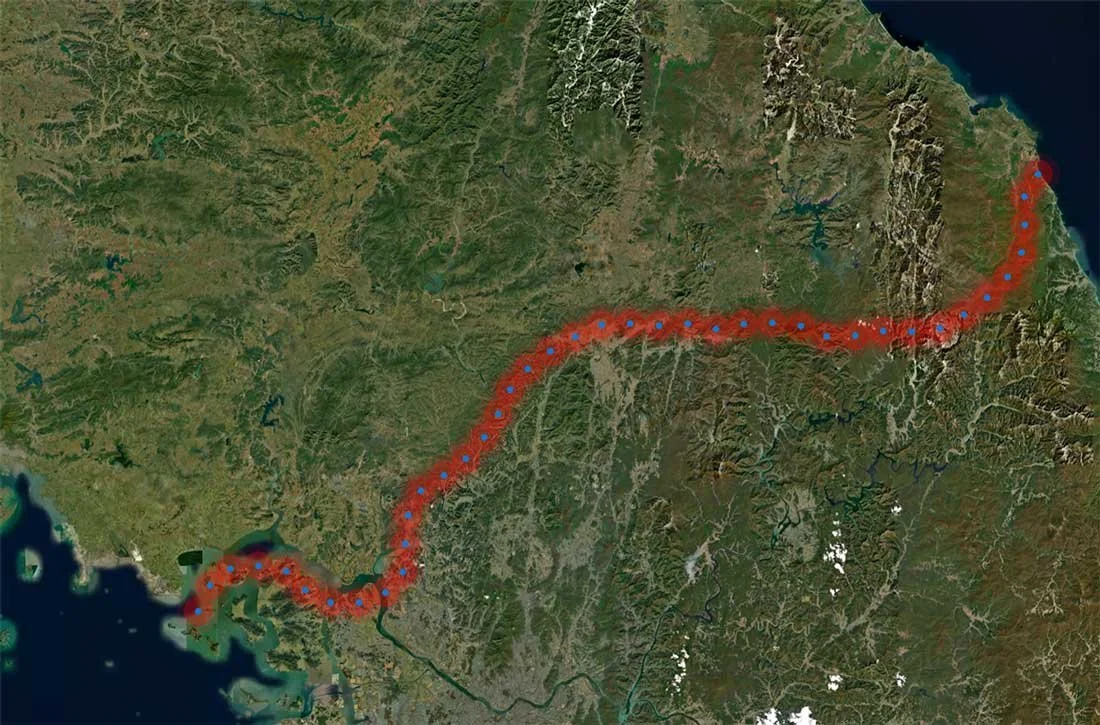
In today’s conflicts, defending the perimeter is no longer about walls and fences alone. Threats arrive from the air—fast, cheap, and hard to predict. FPV drones, loitering munitions, and larger aerial systems have become central tools of disruption, and they’re not going away. To counter this, Squarehead Technology’s acoustic systems can work as a scalable sensor networks that bring persistent surveillance and resilience to borders, infrastructure, and frontline positions.
A Passive, Scalable Defense Layer
Traditional defenses struggle against the sheer variety of aerial threats, such as drones and RAM threats. Radar and optical systems excel in certain conditions but can leave blind spots. Acoustic arrays, by contrast, fills these gaps and can work day or night, in urban clutter or open terrain, and without relying on line-of-sight. Crucially, they are passive and immune to jamming, meaning adversaries cannot simply switch them off.
Squarehead’s Discovair G2+ forms the foundation of this acoustic shield. Mounted on towers, rooftops, fences, or other fixed positions, it enables continuous surveillance with minimal upkeep. Whether deployed in dense frontline grids or stretched along a strategic border, the system scales with the threat profile.
Flexible Deployment for Any Environment
Defense demands vary depending on location and mission. The same acoustic network can adapt:
Frontline defense: high-density deployment to detect and track everything from FPV drones upward (Class I–III).
Strategic perimeters: lower-density grids for larger drones, loitering munitions, and missile activity.
Fixed installations: semi-permanent monitoring from rooftops, telecom towers, or border infrastructure.
With horizontal mode, fewer sensors can cover wide areas, while vertical mode focuses deep across borders for long-range detection. Sensors are ruggedized and built for endurance, capable of remaining in place for extended periods with little service.
Layered Coverage, Seamless Fusion
Acoustic surveillance doesn’t replace other sensors—it strengthens them. Discovair nodes can be layered for extended coverage and fused with radar, RF, and optical systems to provide a unified operational picture. Data streams directly into C2 networks such as Glipe and ATAK, giving commanders real-time, actionable intelligence.
The result is layered defense that is persistent, adaptive, and hard to counter. By integrating seamlessly into existing infrastructure and management systems, acoustic surveillance fills the detection gap where other technologies fall short.
The Future of Perimeter and Area Defense
Modern conflicts show us that borders and strategic infrastructure are no longer safe by default. Protecting them requires a layered approach—one that sees, hears, and understands the space. Squarehead’s Perimeter and Area Defense solution provides exactly that: a scalable acoustic shield for a new era of threats.
-
Modern threats such as FPV drones, loitering munitions, and other aerial systems can bypass fences, walls, and conventional radar. These platforms are small, fast, and hard to predict, which means defense now requires more adaptive and scalable detection methods.
-
While radar and optics work well in specific conditions, they can have blind spots or be affected by weather, clutter, or line-of-sight issues. Acoustic arrays operate passively, cannot be jammed, and function reliably day or night, making them an ideal layer to fill detection gaps.
-
Discovair G2+ is Squarehead’s acoustic surveillance sensor. Mounted on towers, rooftops, or border infrastructure, it enables persistent monitoring with low maintenance. Networks of Discovair sensors can be scaled from dense frontline grids to wide-area border protection.
-
The same acoustic network can adapt to different missions: high-density deployment at the frontline for drone defense, wider grids for strategic border monitoring, or semi-permanent installations on fixed infrastructure. Horizontal mode covers wide areas, while vertical mode extends deep across borders.
-
Acoustic sensors do not replace radar or optical systems but integrate seamlessly with them. By feeding into C2 networks like Glipe and ATAK, they provide commanders with a unified operational picture, ensuring layered defense that is persistent, adaptive, and resilient against countermeasures.